History, live-app walkthrough, diagnosis, competitors, market size, the "Jaisa dikha, waisa mila" strategy across Choose, Buy, Receive and Resolve, prototype, roadmap and business case. Every fact, hypothesis and assumption is labelled.
Click any line to jump. Every page has the section bar at the top and a link back here.
Fact From a filing or credible report, source cited Hypothesis A belief to test with users or data Assumption A modelling input; replace with internal data Target A proposed goal, to be agreed
No. 2 in India in 2014–15; lost that place by 2017. Today: ₹1,093 cr NMV and 1.22 cr buyers in FY26, 65% of units to Tier 2+, still loss-making. The app is clean and easy; Instagram has 3.1M followers but little engagement.
Meesho, Shopsy and Amazon match the low prices with zero seller commission. Buyers can't judge unbranded goods before buying. "100% Quality Guaranteed" is a claim, not proof. Let-down buyers are not won back.
Make one promise, "Jaisa dikha, waisa mila", and keep it when buyers choose, buy, receive and resolve. Start with six near-free fixes; pilot checked listings in two categories.
"Not as described" returns −2 pp vs control · 90-day repeat +3 pp · unhappy buyers reorder · conversion drop ≤ 1% · refund ≤ 5 days · seller retention ≥ 90%.
Approve ₹35 lakh for a 90-day research quarter (plus six near-free fixes now). Release the rest (≈ ₹2.2 cr over 4 quarters) only when each gate is met.
Asset-light: third-party sellers list, Snapdeal earns fees and services; carriers do forward and reverse trips.
| Area | What is known | Status |
|---|---|---|
| Revenue streams | Seller commissions and fees, logistics and other services, advertising | Fact mix not split |
| Major costs | Forward and reverse logistics, marketing, people, technology, payments and COD handling | Interpretation |
| Ratios | NMV per customer ₹807 (FY24) → ₹899 (FY26) · marketplace adj. EBITDA ÷ NMV −4.6% | My calculation |
| Not disclosed | GMV, average order value, take rate, seller fees, repeat rate, CAC, return rates by reason (the most important gap) | Gap |
Sources: AceVector RHP summaries via Chittorgarh, Oquilia and equityresearchindia (Sep–Oct 2026).
The fall came from a capital-heavy GMV war and spread focus, not from closing down. Snapdeal still operates.
Yes, around 2014–15, per a Morgan Stanley estimate reported by CNBC (17 Nov 2015). The exact metric isn't stated; GMV share is likely. By July 2017 Amazon had taken the No. 2 spot.
No. It runs as AceVector's marketplace beside Unicommerce (SaaS, listed Aug 2024) and Stellaro Brands. It lost its position in horizontal e-commerce, not its business.
Sources: CNBC (17 Nov 2015); Global Venturing (29 Oct 2014); Business Today (31 Jul 2017); Wikipedia, each date traced to its cited news source; Chittorgarh (Oct 2026).
| AceVector group, ₹ cr Fact | FY24 | FY25 | FY26 | Change |
|---|---|---|---|---|
| Revenue from operations | 379.8 | 395.0 | 510.4 | +29% |
| Adjusted EBITDA | −26.5 | −39.2 | −15.9 | loss −59% |
| Net loss | −51.3 | −126.3 | −45.5 | loss −64% |
| FY26 segment, ₹ cr | Revenue | Share | Adj. EBITDA |
|---|---|---|---|
| Snapdeal marketplace | 293.7 | 57.5% | −50.3 |
| Unicommerce SaaS | 204.3 | 40.0% | +41.3 |
| Stellaro Brands | 12.8 | 2.5% | n/a |
No profit figure doubled in FY24–26. About 70% of the FY26 improvement came from a one-off ₹57.9 cr FY25 provision not repeating; the rest from revenue growth. Cash burn fell from ₹209 cr (FY23) to ₹27 cr (FY25).
Sources: AceVector RHP restated consolidated figures via Chittorgarh, Oquilia (Sep 2026); MediaNama UDRHP (9 Dec 2025). Different bases (e.g. standalone) are not mixed.
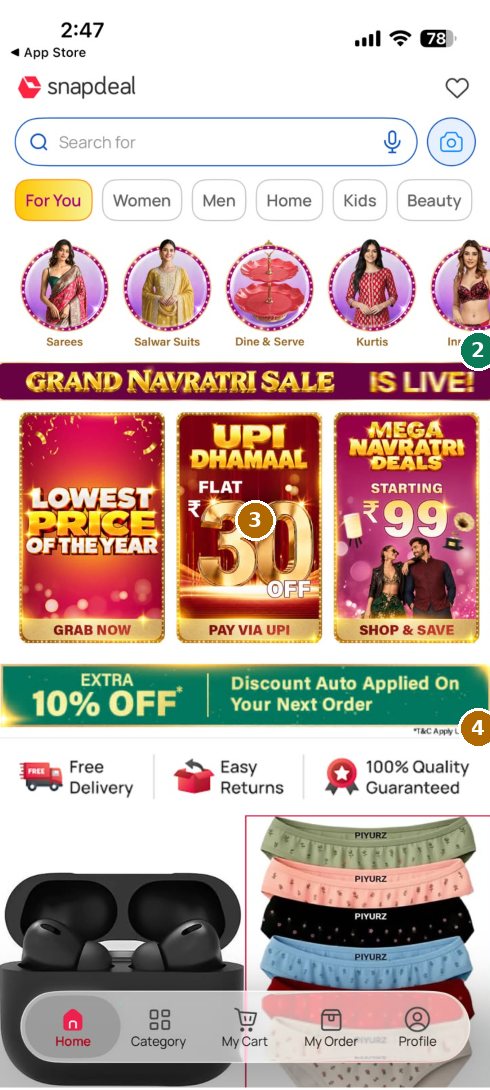
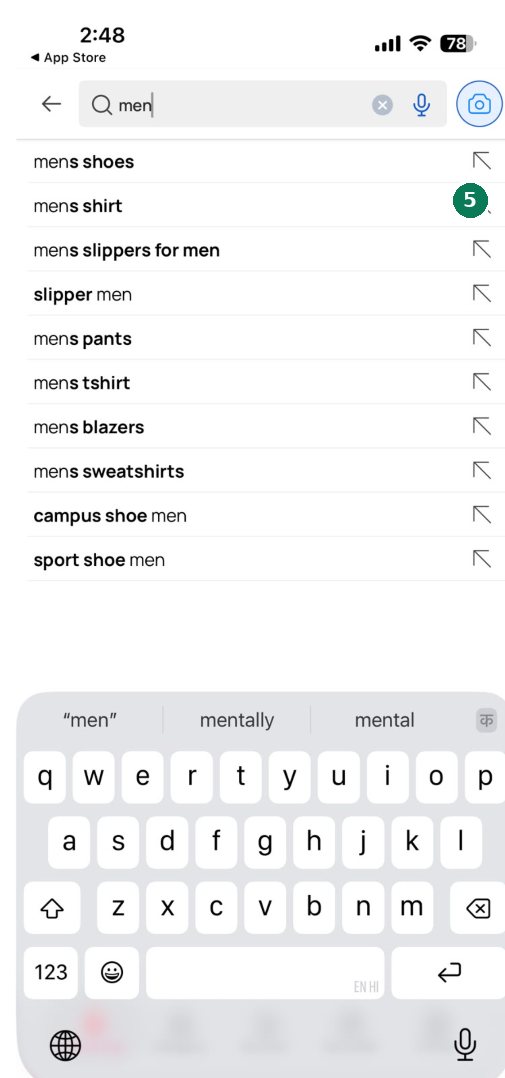
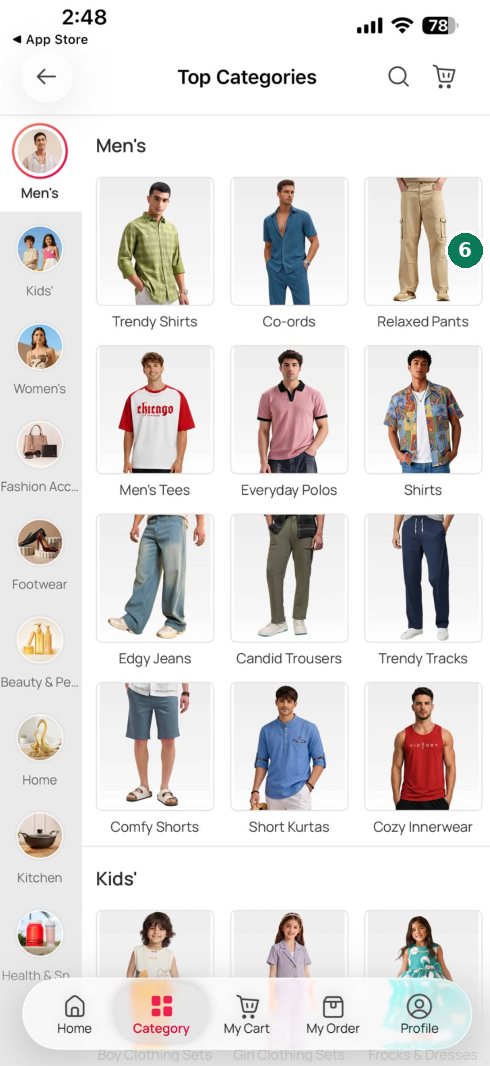
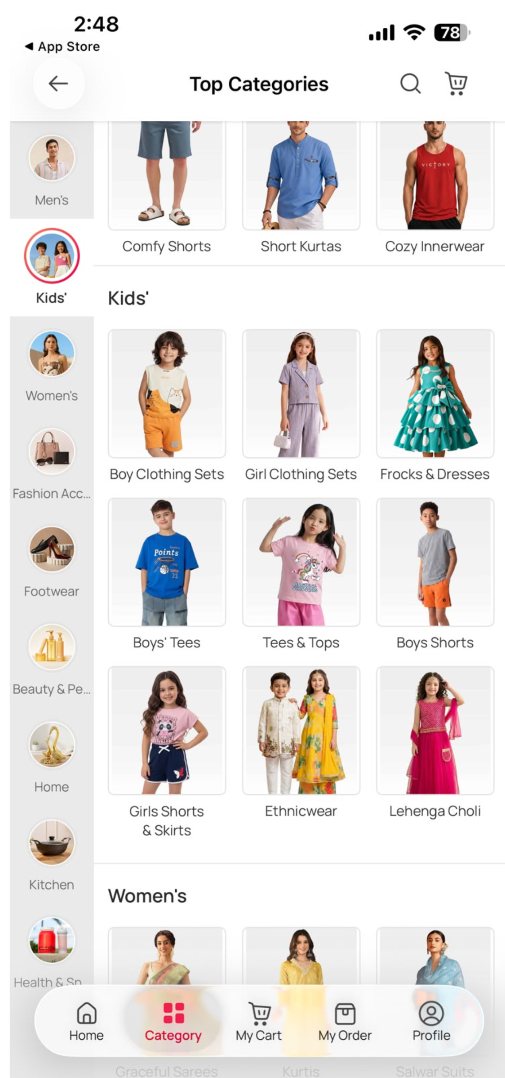
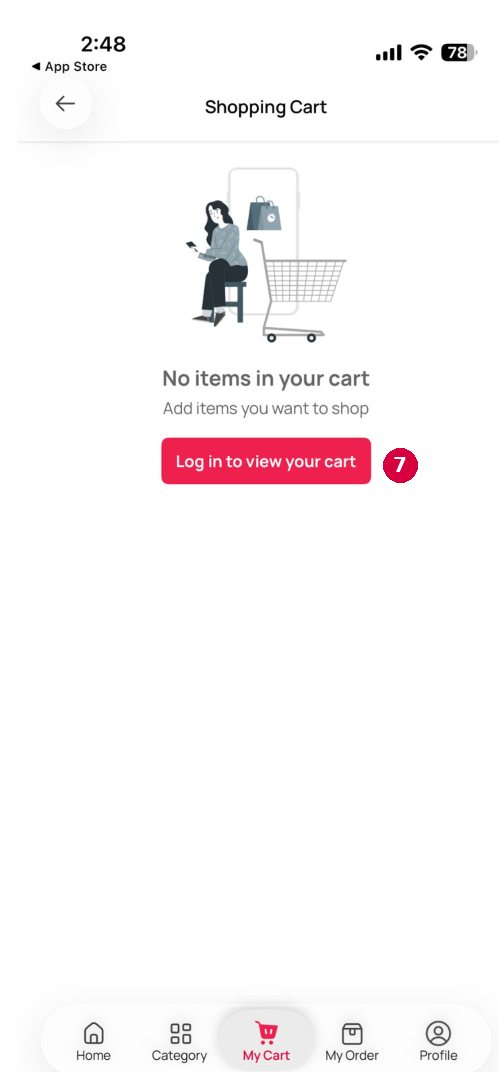
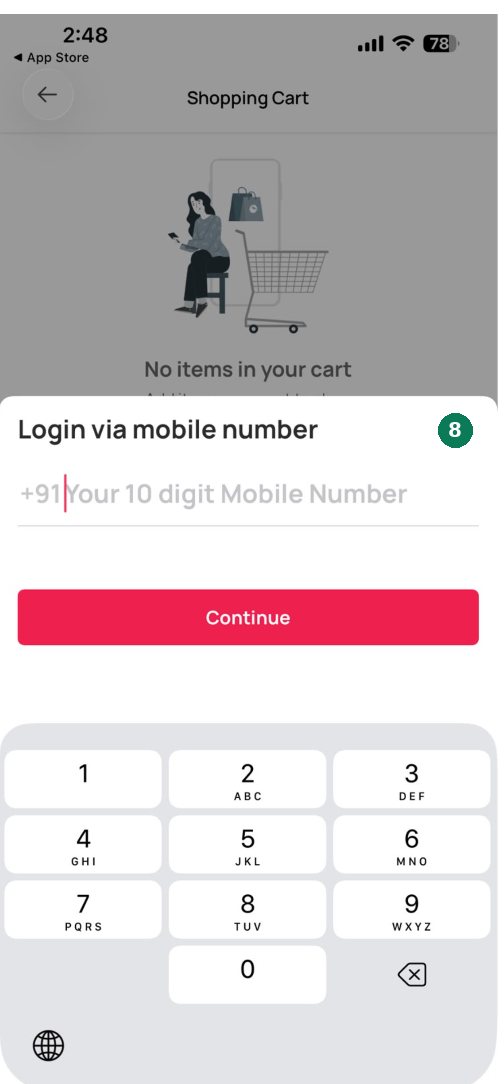
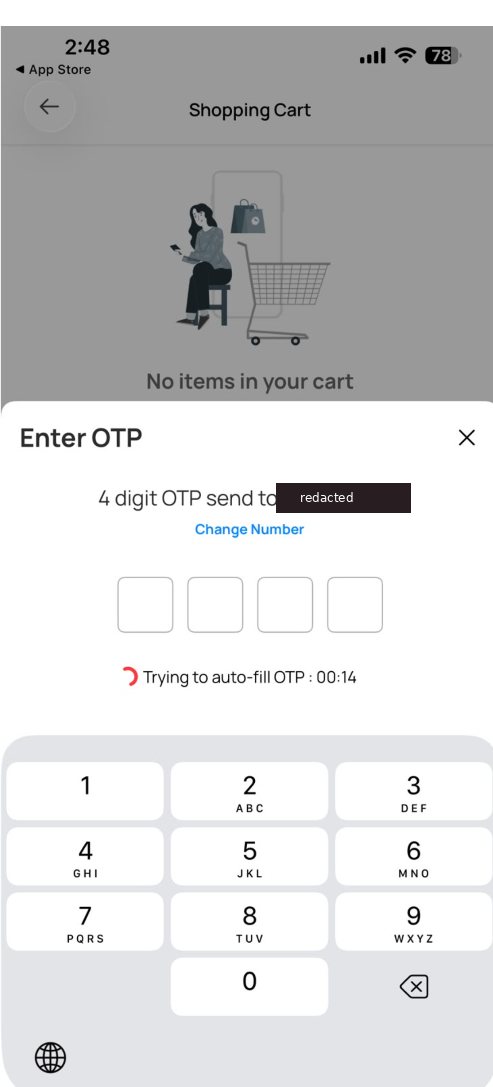
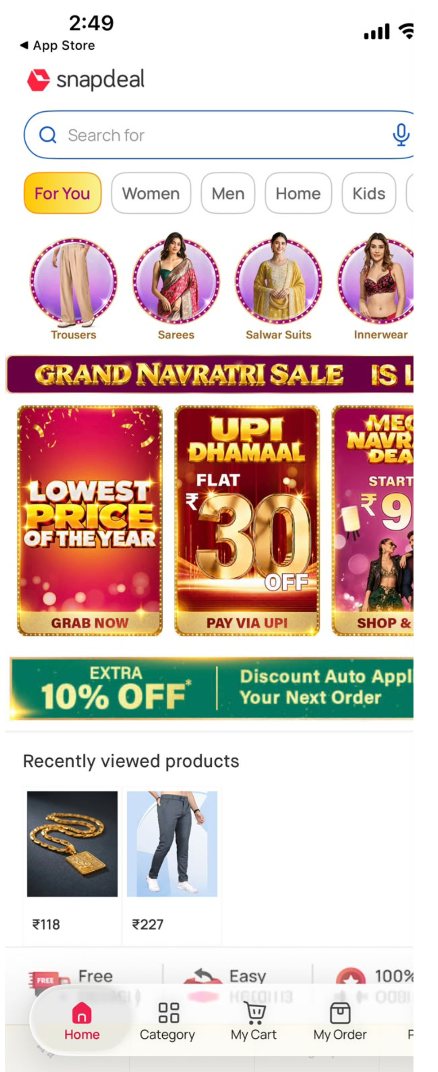
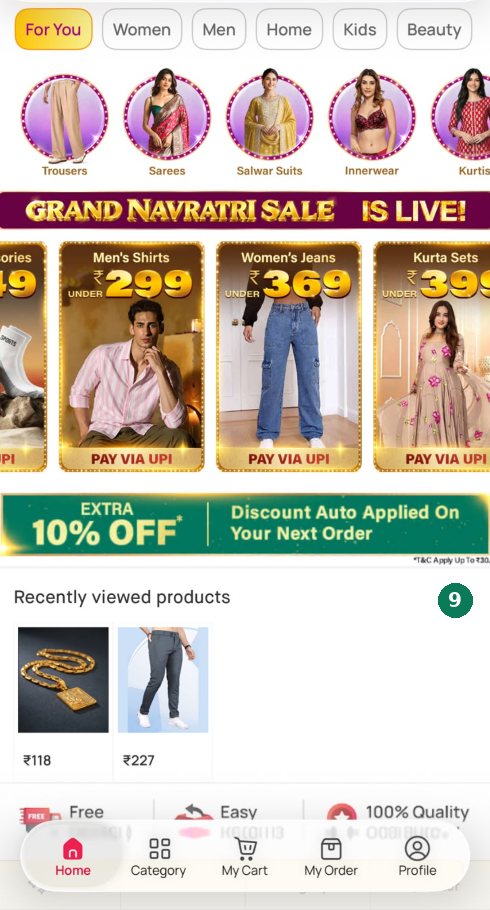
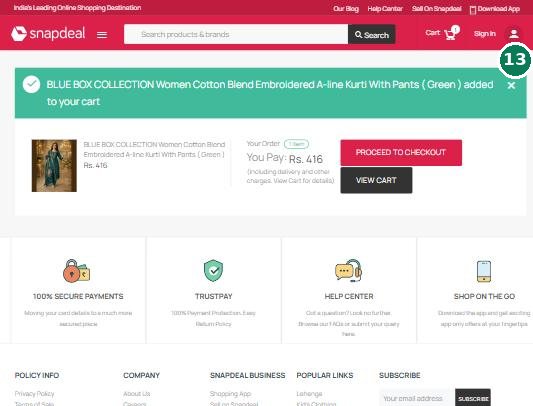
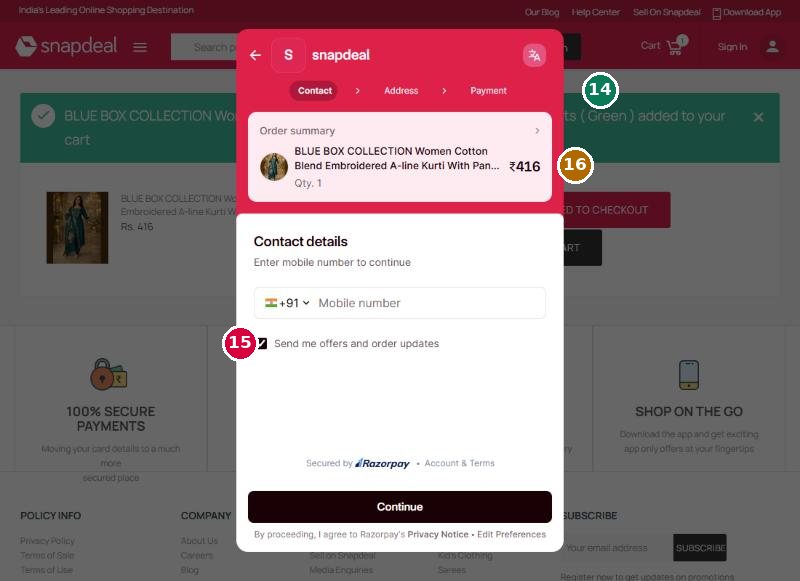
Screenshots from the live iOS app, 15 Oct 2026, during the Navratri sale. Green = strength, amber = opportunity, red = friction.


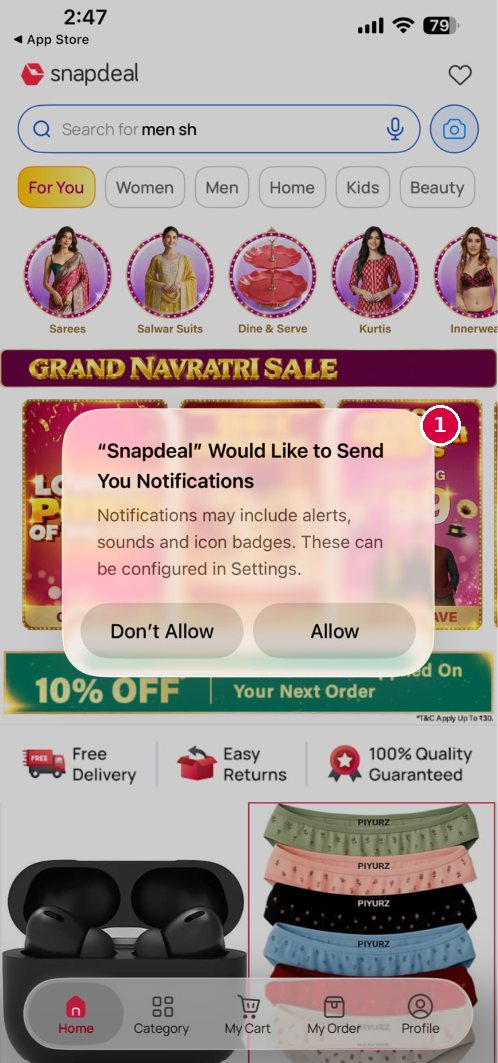
The app already looks good and is easy, so the product problem is trust, not design. Quick wins with no media spend: guest cart, ask for notifications after the first order, and put proof where the claim is.
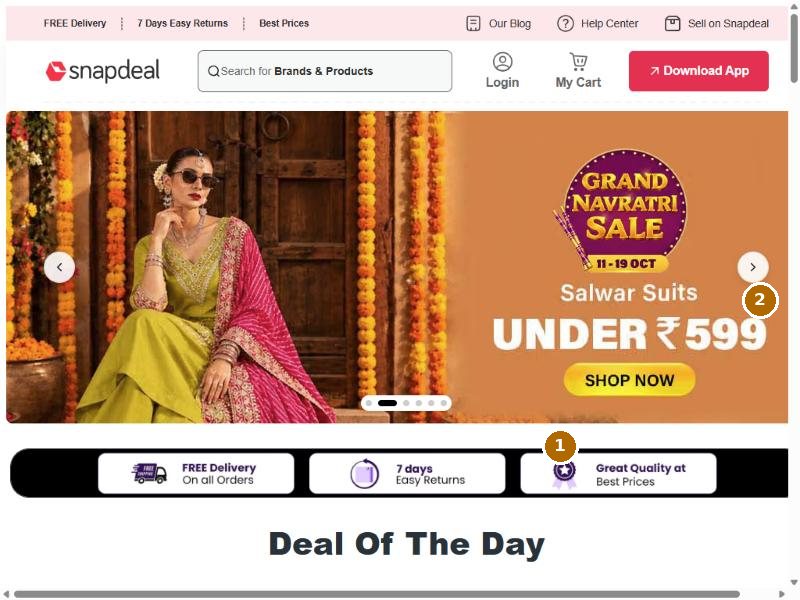
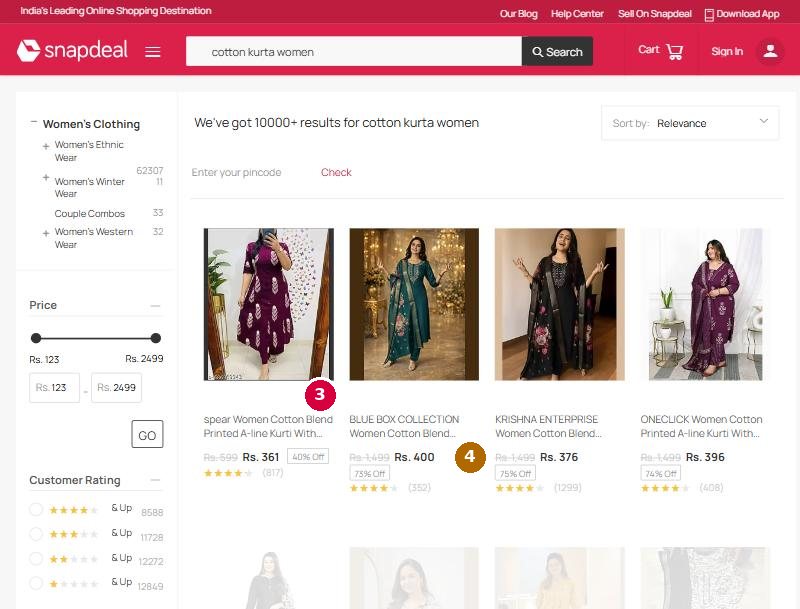
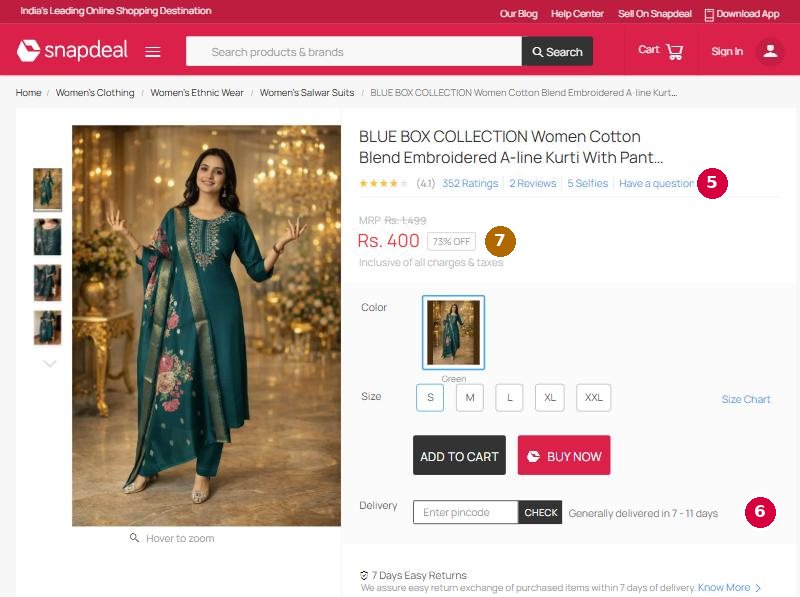
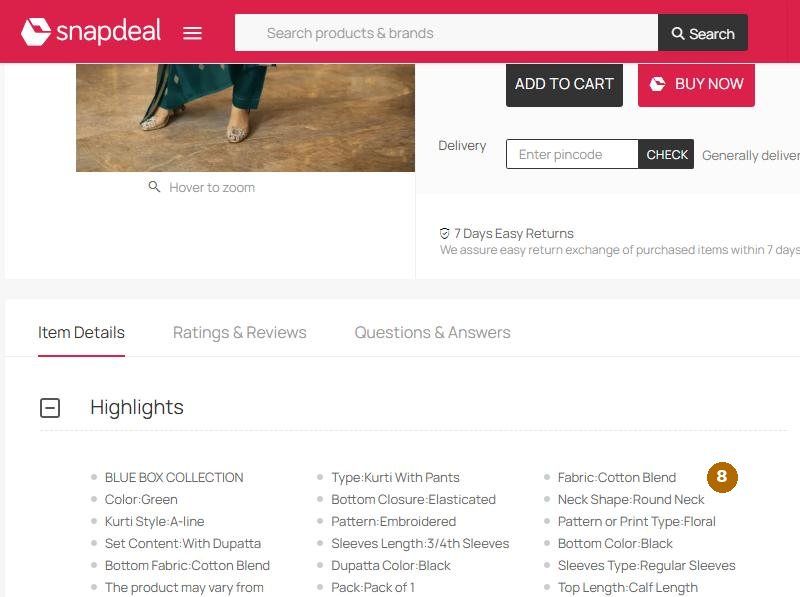
snapdeal.com, 15 Oct 2026. Searched "cotton kurta women", opened a listing, added to cart, stopped at the mobile-number step.


| # | Observed (15 Oct 2026) | Why it matters |
|---|---|---|
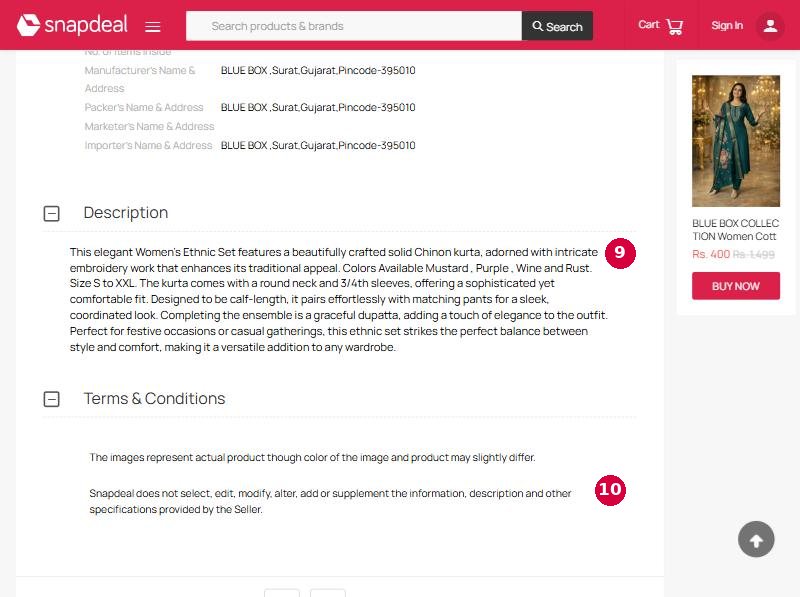
| 8–9 | Highlights say "Fabric: Cotton Blend"; description says "solid Chinon kurta" and lists Mustard, Purple, Wine, Rust for a green item | Exactly how "not as described" returns start |
| 10 | "Snapdeal does not select, edit, modify, alter, add or supplement the information… provided by the Seller" | No one checks the listing |
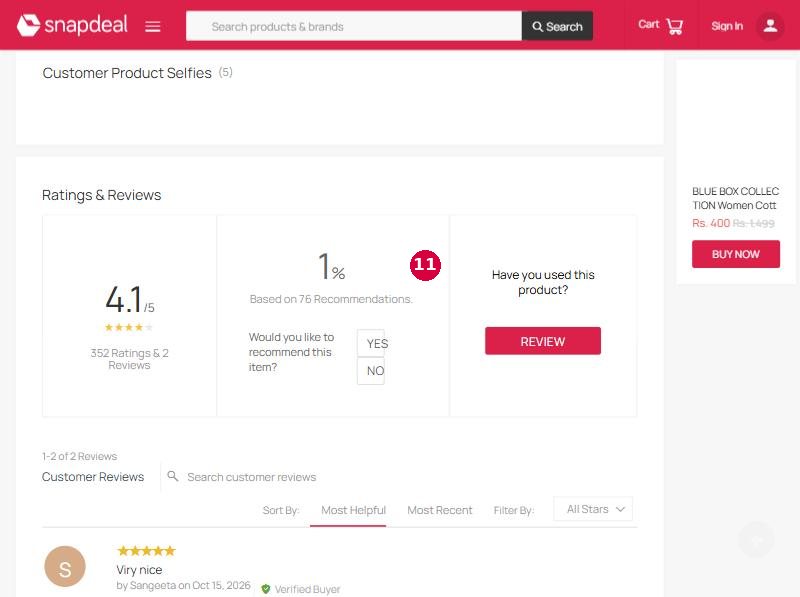
| 11 | 4.1★ next to "1% · based on 76 recommendations" | Mixed signals confuse buyers |
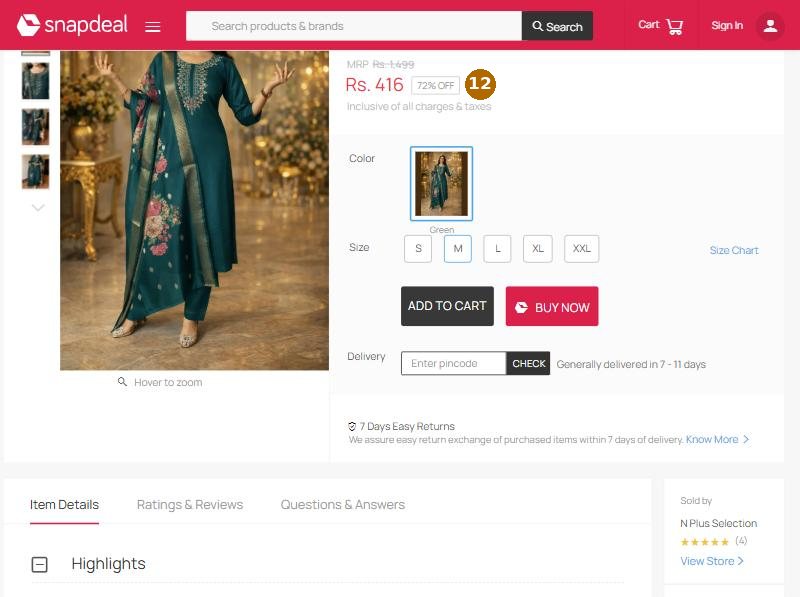
| 12 | Price ₹400 becomes ₹416 when size M is chosen | Feels like a bait price |
| 13–14 | Guest cart works on the web; checkout is a clear 3-step Contact → Address → Payment | Strength to bring to the app |
| 15–16 | "Send me offers" pre-ticked; order summary shows no delivery date or return promise | Consent and certainty at the last step |
Seller text goes live as written; mismatches reach buyers.
"Great quality", "100% quality", 73% off: big words, thin evidence.
Clean, easy, guest cart on web, simple checkout. Fix trust, not design.
Falling rank, valuation drop and losses are outcomes. These are the likely causes, with the case against each.
| Root cause Hypothesis | Supporting evidence | Counter-argument | Confidence |
|---|---|---|---|
| 1. Horizontal GMV war vs better-funded rivals | Amazon entered 2013 with a global balance sheet; Snapdeal lost No. 2 by 2017 | Everyone discounted; Flipkart survived the same war | High |
| 2. Capital and focus spread | FreeCharge, GoJavas and others in 2015; FreeCharge sold for ₹385 cr in 2017 | Payments was strategic (PhonePe); Unicommerce became valuable | Medium |
| 3. Weak quality and trust signals | USTR counterfeit listing 2021 (removed 2022); value goods carry more uncertainty | No public data on Snapdeal's returns or ratings vs rivals | Med–low · key gap |
| 4. Less logistics control | Amazon and Flipkart built own networks; Snapdeal sold logistics assets in 2017 | 3PL has matured; Meesho grew asset-light | Low |
| 5. Undifferentiated after 2021 | Shopsy, Meesho, Bazaar all low price, zero commission | Snapdeal still grew NMV 73% in two years | Medium |
What a PM can still change: causes 1, 2 and 4 are history. Causes 3 and 5 are open, and they point to the same fix.
Known then: No. 2 at ~32%; Amazon scaling; huge funding.
Possible action: lead in 3–4 categories instead of matching rivals everywhere.
Trade-off: slower headline GMV. Early warnings: repeat rate, CAC payback, category share, NAD returns.
Known then: merger off, cash tight, value focus chosen.
Possible action: make trust the core of the value promise from day one: seller standards, verified photos.
Trade-off: fewer sellers short term. Early warnings: complaints per 1,000 orders, seller churn, NPS by category.
Known then: Shopsy (2021), Meesho, Amazon Bazaar (2024) at zero commission.
Possible action: differentiate on reliability, not fees; use Unicommerce data to help sellers.
Trade-off: may lose price-only sellers. Early warnings: seller multi-homing, share of wallet, uninstall reasons.
No hindsight certainty: none of these alone would have prevented the decline. Capital, competition and timing were strong forces.
| Theme in 2025–26 complaints | Seen on | Our answer |
|---|---|---|
| Wrong or mismatched item | Trustpilot, complaint sites | Verified Value listings |
| Return pickup never came | Trustpilot, Play Store | Refund on pickup, ₹30 if late |
| Slow or wallet-only refunds | Trustpilot, complaint sites | Refund on pickup ≤ 5 days |
| Support hard to reach | Trustpilot, Play Store | Hindi callback in 24 h |
In-app ratings reflect buyers who were happy enough to stay. The ones who were let down leave and post elsewhere. Snapdeal replies by asking them to email an order ID. A recovery flow inside the app would catch them first.
Posts on X could not be opened in this research; the same themes repeat across the sources here.
Sources: Google Play (12 Sep 2026); App Store; Trustpilot (Oct 2026); consumercomplaints.in (2025). Reviews are self-selected, not a random sample.
Value shoppers can't confidently judge quality, fit, material or seller reliability before buying.
Hesitation and lower conversion · "not as described" returns · support contacts · weaker repeat purchase. Each NAD return costs a forward and a reverse trip.
Which doubt matters most, how often, for which segments, and whether reducing it changes behaviour.
Many value goods come from the same clusters (Surat textiles, Moradabad metalware, Delhi NCR home goods) that supply branded labels. The gap is often brand and ad cost. Quality varies by seller, so the buyer's problem is uncertainty, not low price.
Evidence boundary: no primary research or Snapdeal return data is claimed. The problem is ranked as the key research gap.
| W | The problem | Solution |
|---|---|---|
| Who | Tier 2+ value shoppers: occasion buyers, household restockers, new online shoppers; and small sellers and makers | Pilot with occasion buyers and restockers in ethnic wear and home & kitchen; ~300 sellers |
| What | They can't judge quality before buying; "100% quality" is a claim; let-down buyers drift away | Verified Value proof on every pilot item; a fast fix for unhappy orders |
| When | At the product page, at delivery, at return; peaks in festive sales like Navratri | Proof before buying; one-tap "did it match?" after delivery; fast refunds; festive bundles of checked items |
| Where | Product page, checkout, after delivery; Instagram and reviews, where trust forms | In-app proof; buyer-photo reels on Instagram; one-tap "did it match?" after delivery |
| Why | Quality varies by seller; price-led messages; rivals match price with zero commission | Compete on reliability: what you see is what you get |
| How | Quick wins (month 1) → research and baseline (Q1) → Choose + Buy A/B (Q2) → Receive + Resolve (Q3) → scale (Q4) | |
Ethnic wear, gifts · few times a year
"Will it look like the photo?"
Home, kitchen · monthly
"Same quality every time?"
Basics · prefers COD, local language
"What if returns are hard?"
Fashion · weekly browsing, many apps
"Will it fit?"
| Q1 method | Sample | Goal |
|---|---|---|
| Buyer interviews | 24 (6 per segment), 4 Tier 2–3 towns, Hindi + 1 regional language | Quality, accuracy, delivery, refunds, why they chose rivals |
| Seller interviews | 10 (5 top-rated, 5 high-return) | Cost of returns, listing effort, view of standards |
| Survey | 1,500 recent buyers incl. lapsed | Size issues by segment |
| Data baseline | 12 months of orders | Returns by reason, repeat, complaints, refund time |
Avoid: "Would you shop more if listings were verified?" (leading)
Segments are hypotheses. Tier 2 shoppers are not one group: the same town has all four.
| Player | Scale and positioning Fact | Seller fees | Source (date) |
|---|---|---|---|
| Meesho | Marketplace NMV ₹41,560 cr; 26.4 cr annual transacting users; 72% COD; returns 7.85% of shipped orders (H1 FY26); own logistics (Valmo) | Zero commission | Inc42 (Oct 2026); Meesho RHP via INDmoney |
| Flipkart Shopsy | 450M+ downloads; 20,000+ pin codes; AI search, vernacular, video, games and rewards | Fully zero commission | Flipkart Stories (25 May 2026) |
| Amazon / Bazaar | Low-cost unbranded store inside Amazon; zero referral fee on 12.5 cr+ products under ₹1,000 | Zero referral fee < ₹1,000 | YourStory (2 Mar 2026); TechCrunch (2024) |
| Snapdeal | NMV ₹1,093 cr; 1.22 cr buyers; 65% Tier 2+; 84% of units under ₹599; 72.69% of orders without a search | Revenue ≈ 26.9% of NMV (not a pure fee) | AceVector RHP via Inc42 (Oct 2026) |
Price, seller fees, scale or own logistics. Meesho is ~38× bigger by NMV.
A clean, easy app; curated proof of quality; maker stories; fast service recovery; local trust points.
Meesho returns 7.85% of shipped orders. Snapdeal's rate isn't public: measure it in Q1.
Illustrative positioning by the author Hypothesis, to test in the Q1 journey audit.
Buy a ₹399 kurta and a ₹299 storage set on all four apps to one Tier 2 pin code, then return one. Record specs, buyer photos, delivery promise vs actual, COD fee, refund days and languages.
| Who · when | What they did | Evidence it matters | How Snapdeal uses it |
|---|---|---|---|
| Amazon · 2023 | "Frequently returned item" badge on product pages | Warns before purchase; pushes sellers to fix listings (Value Added Resource, Mar 2023) | "Say as described" score; flag high-NAD listings |
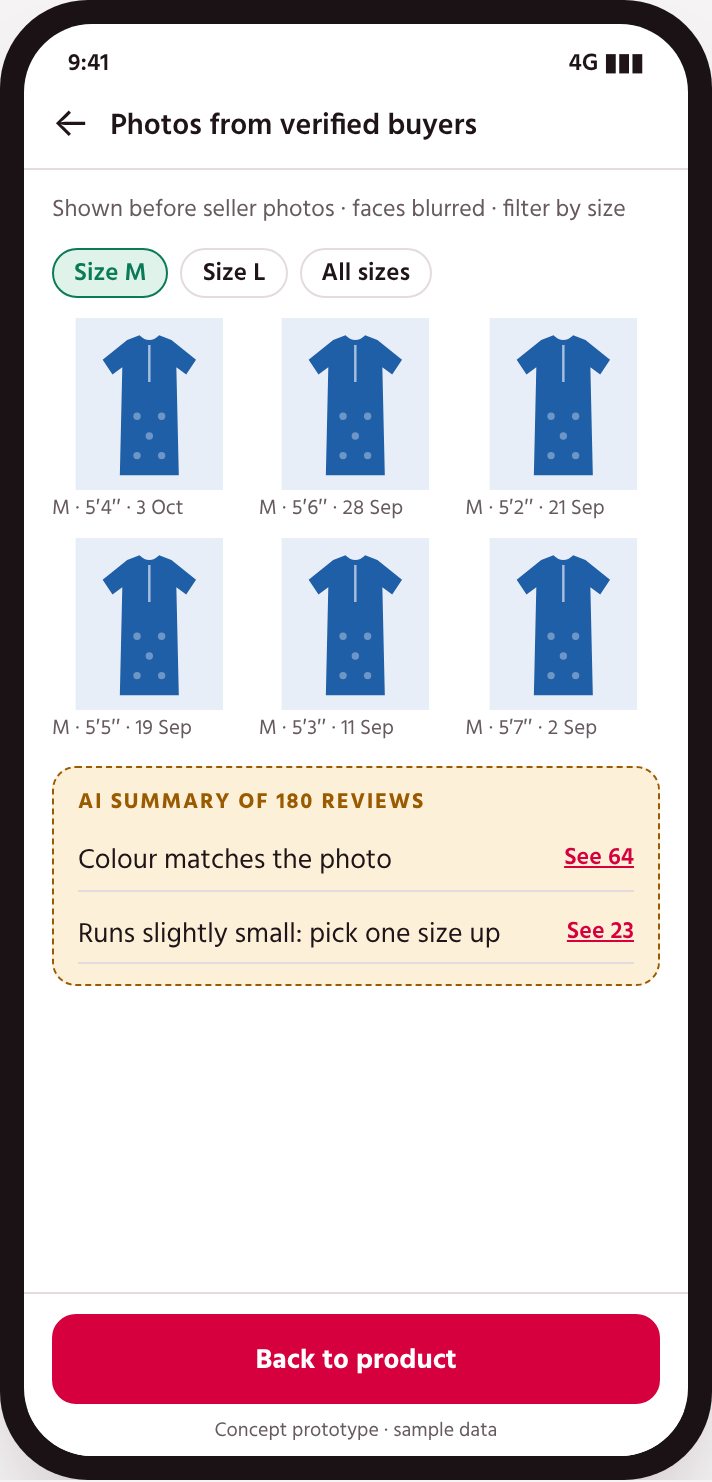
| Amazon · Aug 2023 | AI-generated review highlights | Summarises what customers say into key themes on the page (iPhone in Canada, Aug 2023) | Labelled AI summary with links to source reviews |
| Flipkart | Open Box Delivery: check the item at the door | Buyer can refuse a wrong or damaged item before accepting (Flipkart Stories, Oct 2026) | "Did it match?" check at delivery; refund on pickup |
| Myntra · 2016 | Uniform size chart across brands | ~50% of its returns came from inconsistent sizing; aimed to cut returns 30% (Business Insider) | Size in inches + "fits like" by buyer height |
| Meesho | Value marketplace at scale, zero commission | 72% COD; returns 7.85% of shipped orders (H1 FY26 RHP) | Benchmark for Snapdeal's own return rate |
Evidence is as reported by each source; outcomes for Snapdeal must be tested in the pilot.
Today: ₹1,093 cr NMV ≈ 0.6–0.8% of SAM. SOM ≈ 1.0–1.5% of SAM, about 2× today. FX assumed ₹87 per US$.
TAM: Bain "How India Shops Online 2026" (Apr 2026): $65–66B in 2025, 290–300M shoppers; Tier 2+ drove about half of new orders.
SAM: Kearney (2021) forecast value e-commerce at ~$20B by 2026; cross-checked against Meesho alone at ₹41,560 cr (~$4.8B) NMV. Range kept wide.
SOM: repeat purchase and Verified Value categories growing NMV ~25% a year, as FY25→FY26 did (+25.7%).
290–300M online shoppers (2025). Snapdeal: 1.22 cr ≈ 4%. Meesho: 26.4 cr.
Sources: Bain & Company, How India Shops Online 2026 (8 Apr 2026); Kearney via Business Today (17 Aug 2021); Inc42 (5 Oct 2026).
What you see is what you get. A simple promise a Tier 2 shopper understands, and one rivals competing on price can't easily copy.
| Moment | What changes | Proven elsewhere | Metric it moves |
|---|---|---|---|
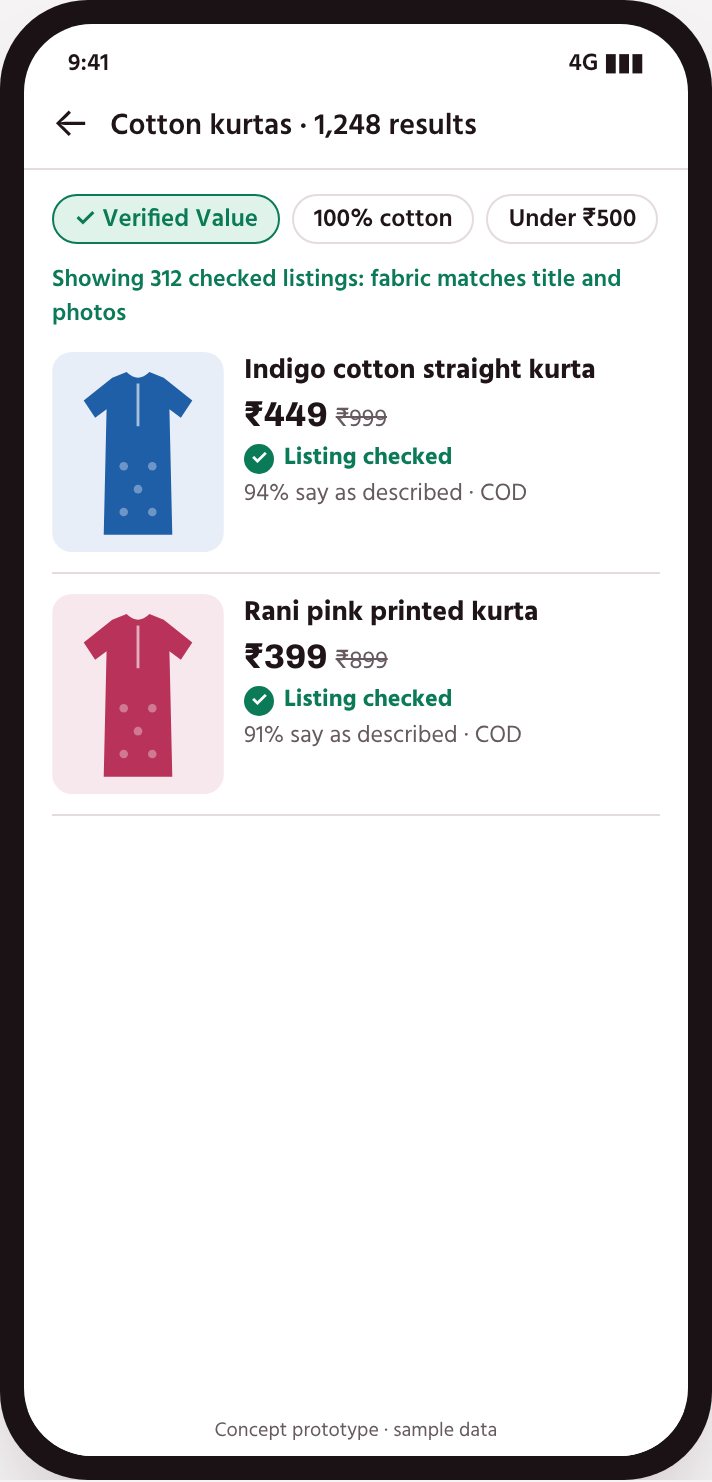
| Choose | Checked listings (fabric, colour, size), buyer photos first, size in inches, one price in every size | Amazon "frequently returned" badge; Myntra size chart | "Not as described" returns |
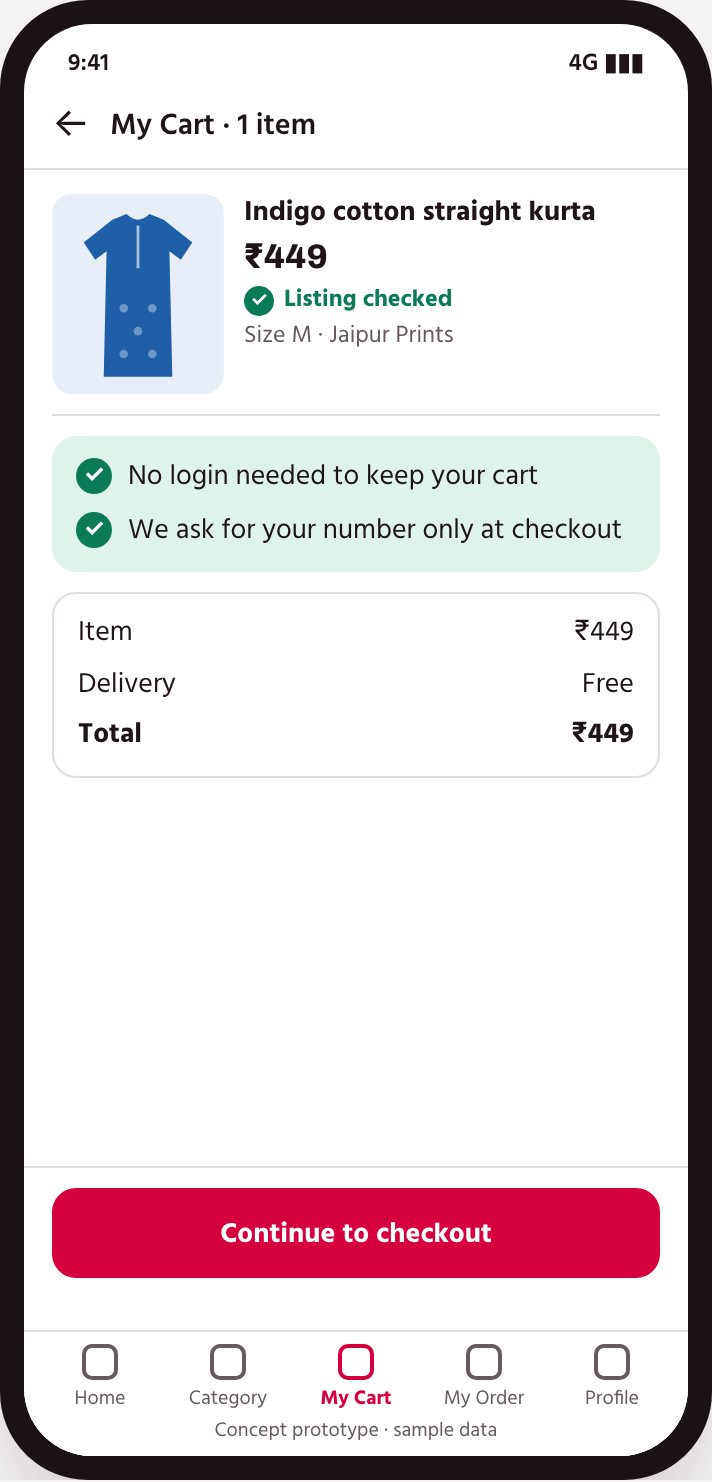
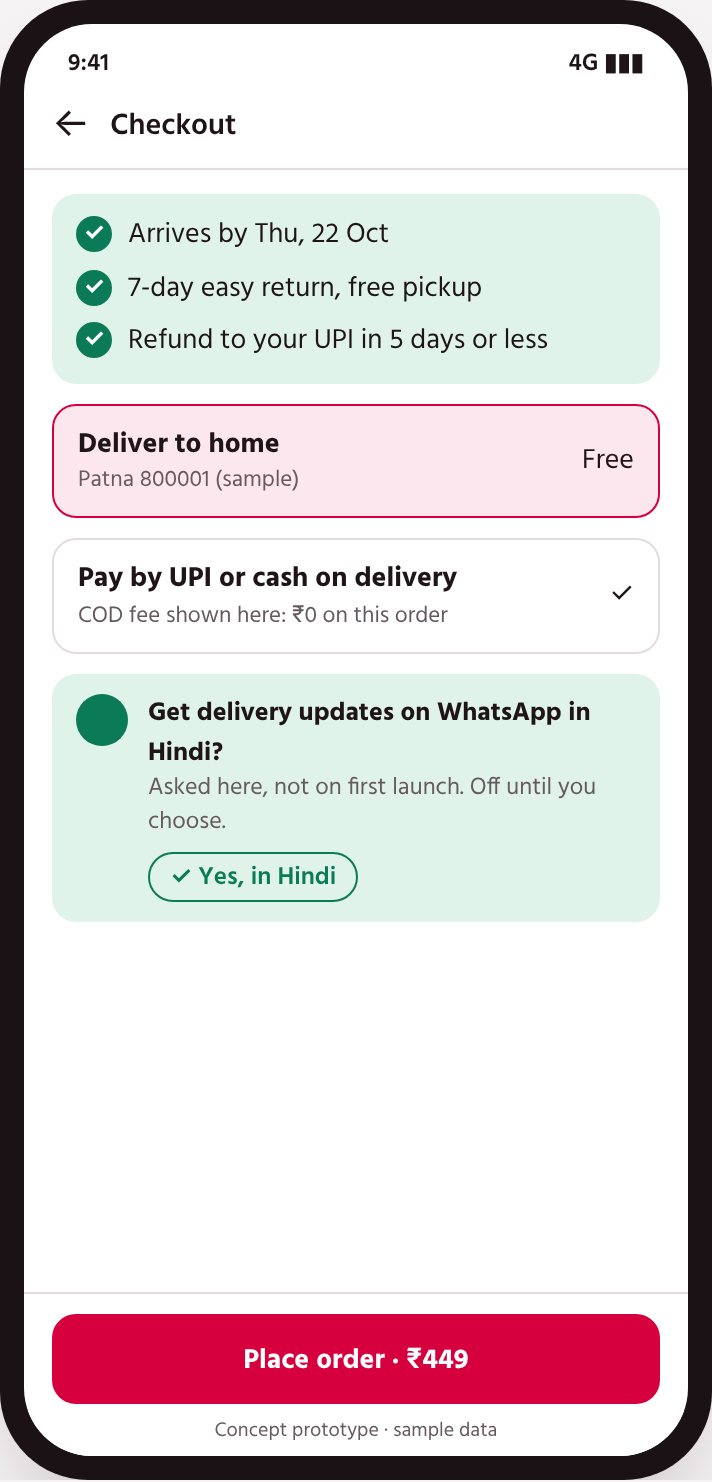
| Buy | Guest cart, promised date, return and refund terms before paying; opt-ins left unticked | Web guest cart already works on snapdeal.com | Checkout completion |
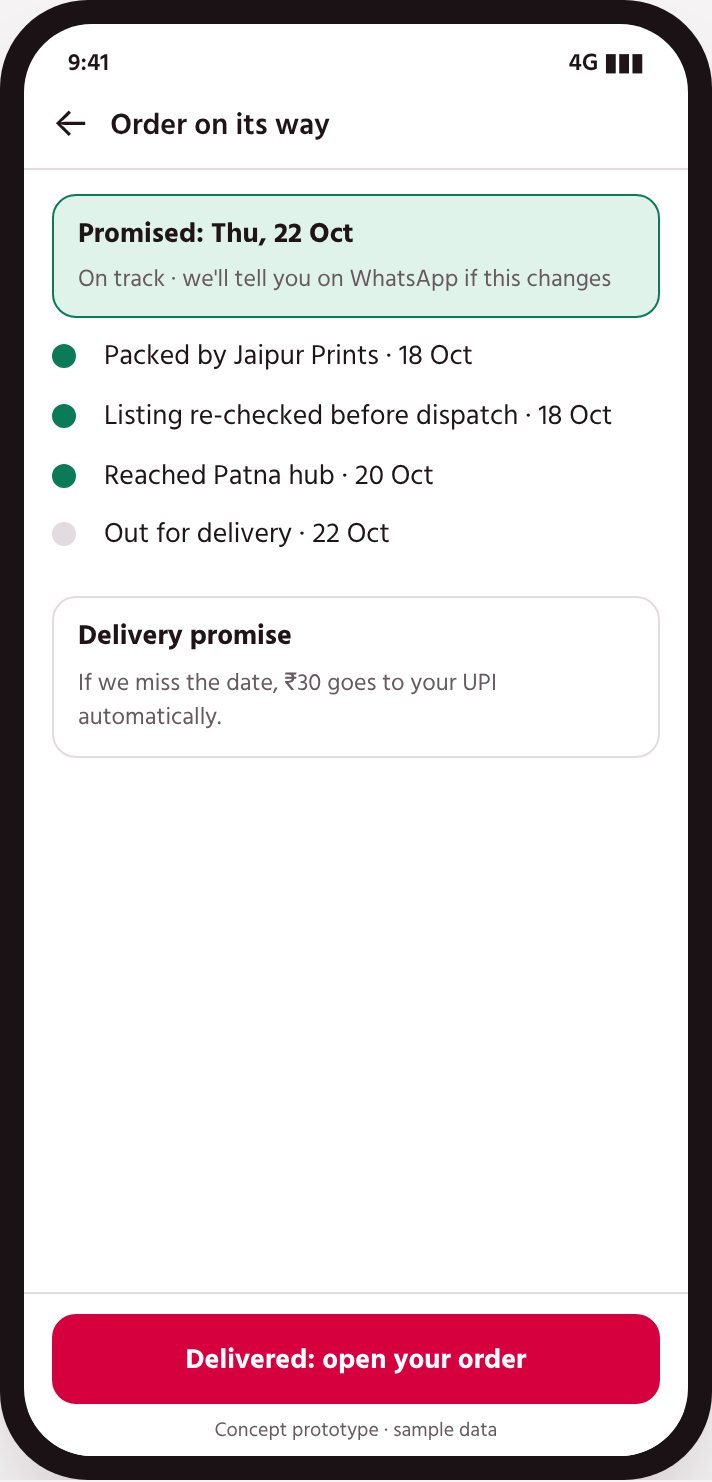
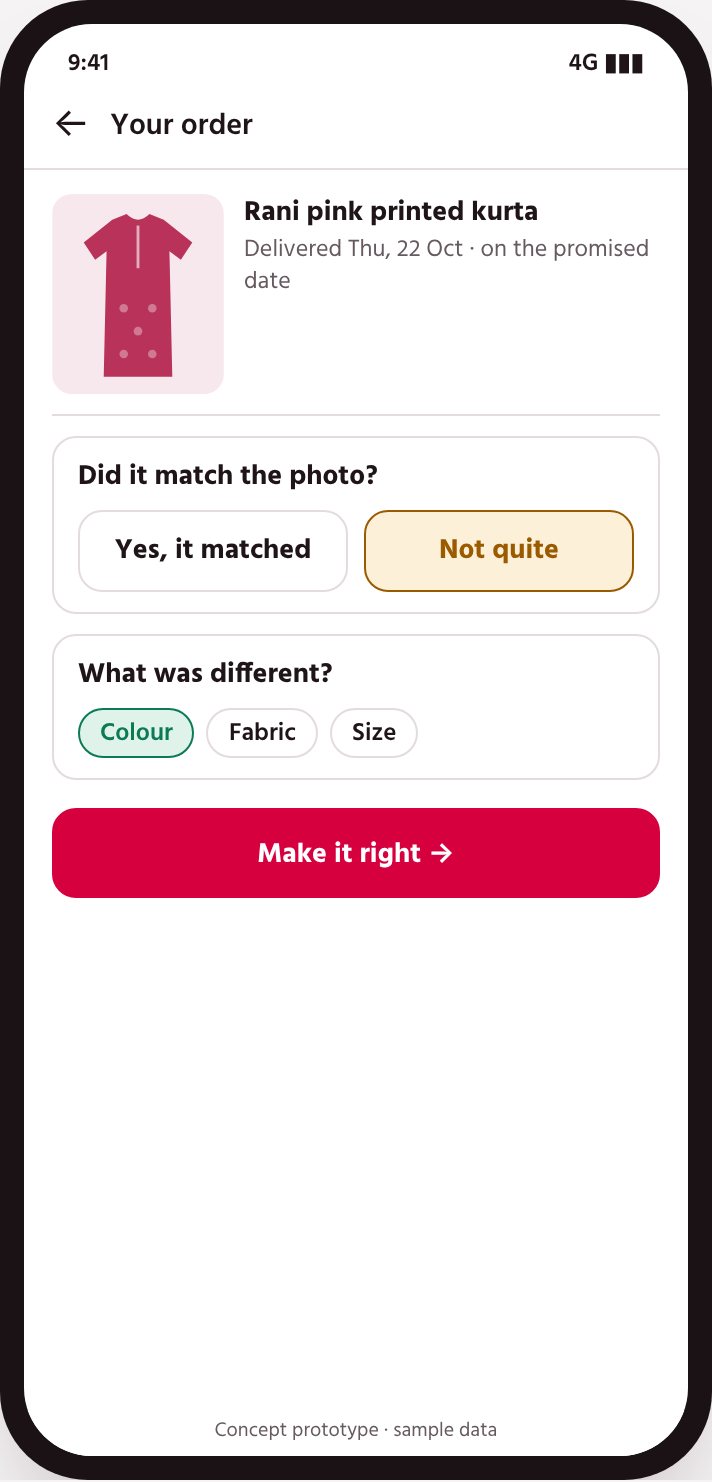
| Receive | One promised date, Hindi WhatsApp updates, ₹30 back if late; one-tap "did it match?" | Flipkart Open Box Delivery (check at the door) | Promise kept; North Star |
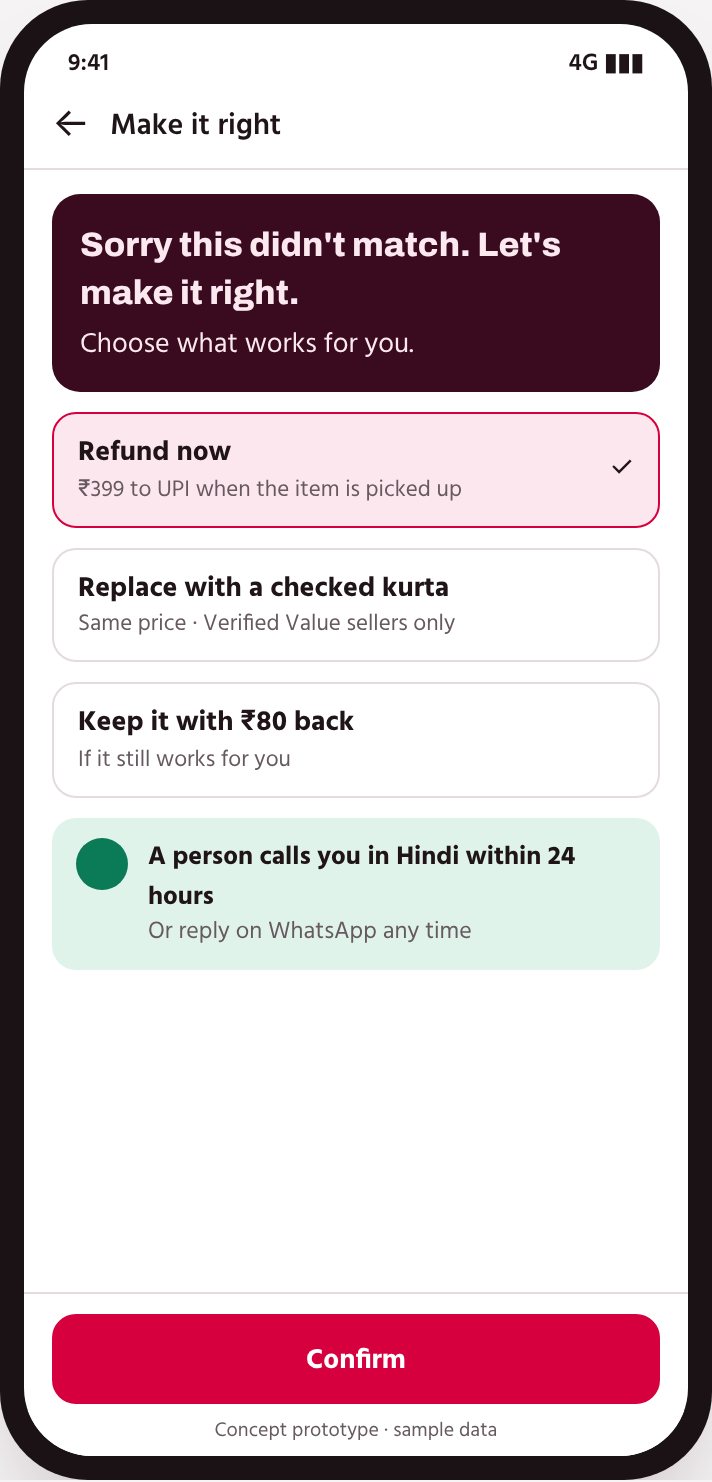
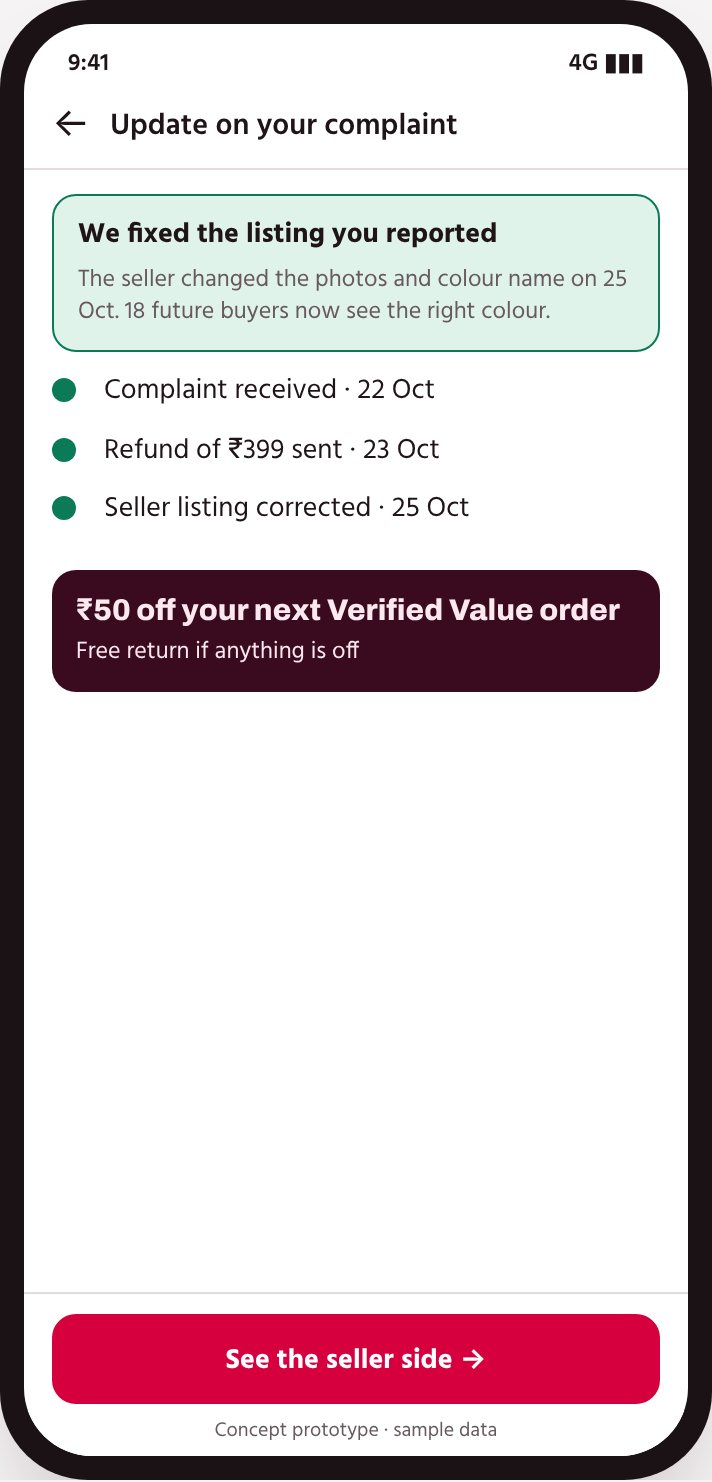
| Resolve | Refund on pickup, checked replacement, Hindi callback in 24 h, proof the seller fixed it | Service recovery: reply fast, close the loop | Repeat purchase |
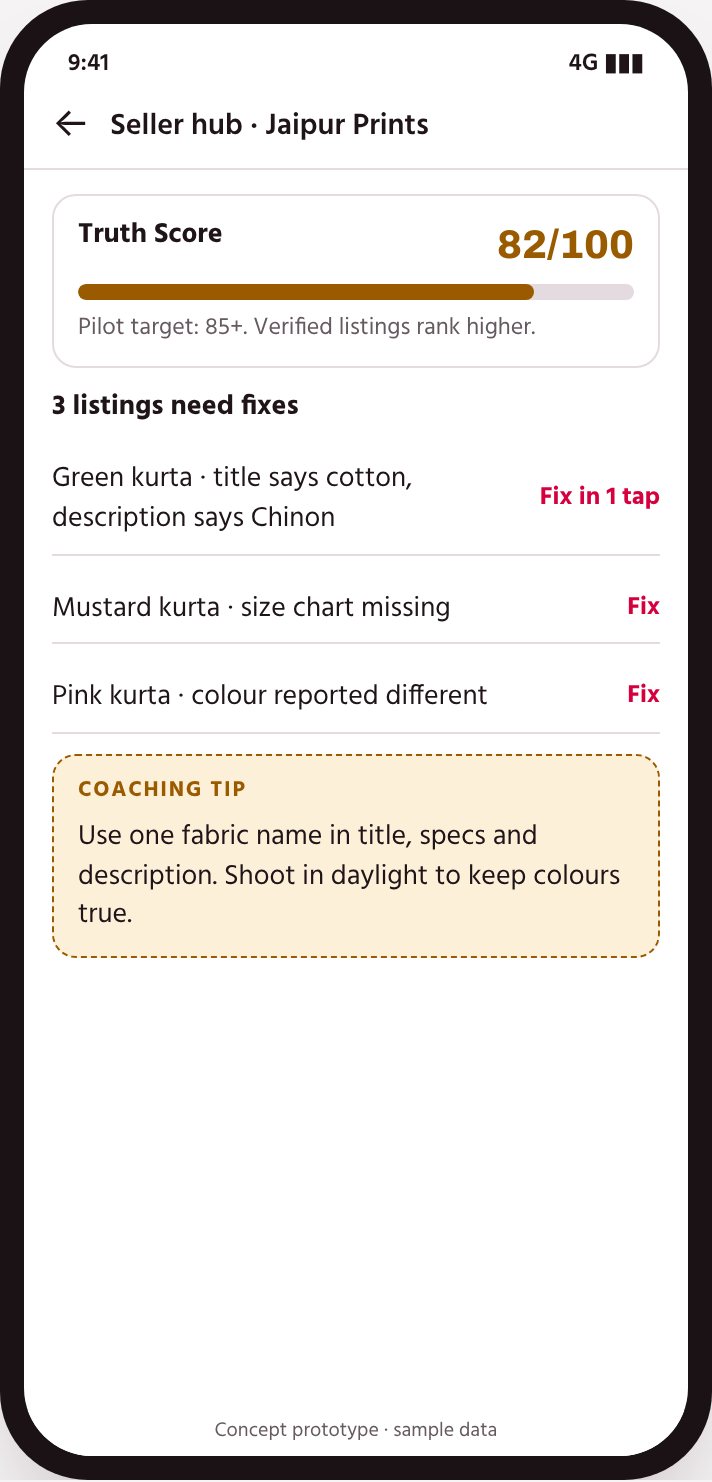
| Foundation | Seller Truth Score: accuracy from returns and "did it match?" answers; one-tap fixes; accurate sellers rank higher and pay less for ads | ||
Orders delivered, kept and rated "matched" per month
It rises only when the listing was true, the delivery came and the buyer was happy. It can't be gamed by discounts.
| Input metric | Owner |
|---|---|
| Listing accuracy (Truth Score) | Catalogue + Seller Ops |
| Share of orders with buyer photos | Product + Community |
| Promised date kept | Logistics |
| Refund time; complaint fixed in 24 h | CX |
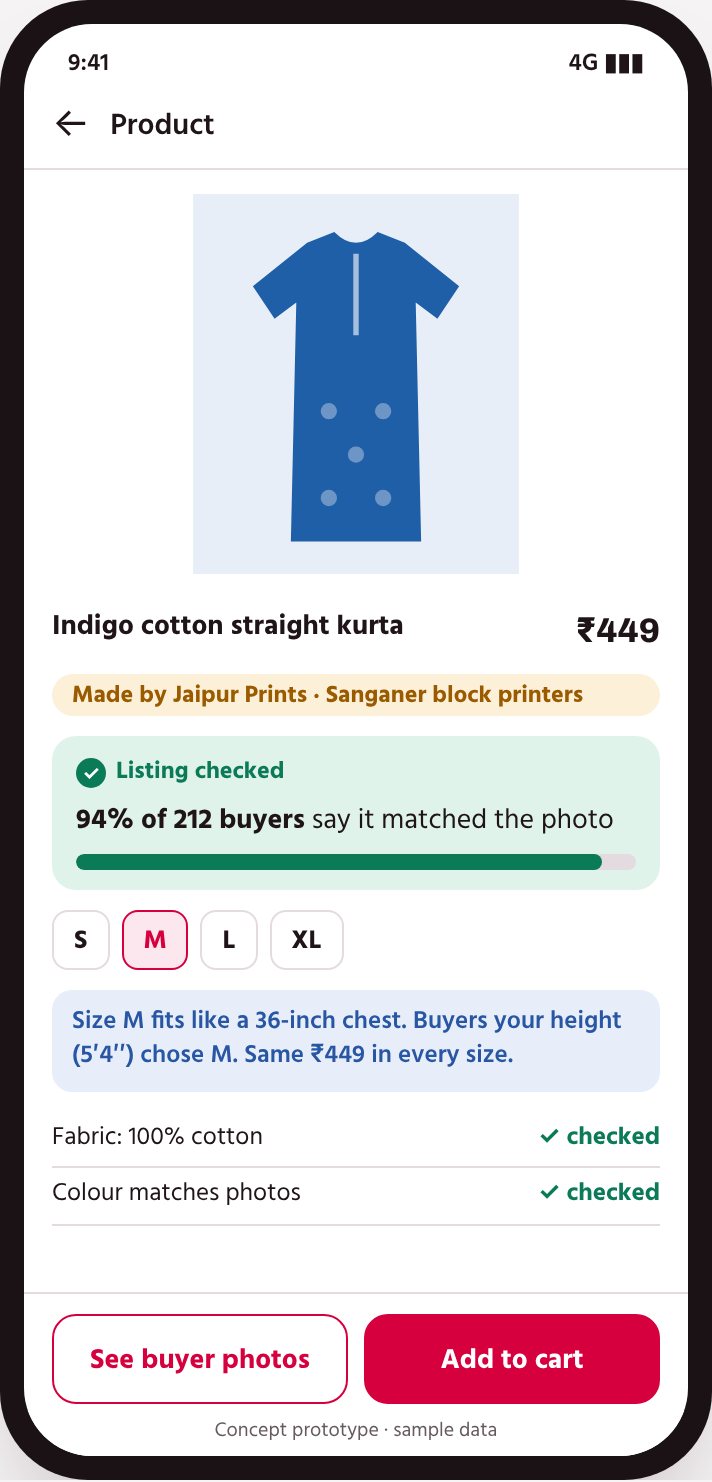
AI + human checks that title, specs and photos agree. Badge only when they do.
Real photos from buyers, filterable by size, shown before seller photos.
Built from NAD returns. Exact fixes and coaching; penalties only after human review.
Delivery date, 7-day return and refund in 5 days or less, shown before paying.
Business mechanism: fewer NAD returns save forward and reverse trips; trust lifts repeat purchase.
Pilot: ethnic wear + home & kitchen · ~300 sellers · Tier 2+ buyers · half of pilot buyers see it (A/B).
| Intervention | User benefit | Cost / risk | Decision |
|---|---|---|---|
| Stronger seller standards | Fewer bad experiences | Seller churn to zero-fee rivals | S1 · pilot |
| Accurate listings (AI + human checks) | Item matches photo and specs | Model errors; review cost | S1 · pilot |
| Verified buyer photos | See the real item | Moderation; privacy | S1 · pilot |
| Clearer delivery promise | Plan around a date | Needs carrier data | S2 · Q3 |
| Transparent returns and refunds | Lower risk to try | Abuse; reverse-logistics cost | S2 · Q3 |
| Category-specific QC | Fewer defects | High cost per order | S3 · later |
Price war · private labels · own logistics fleet
Occasion buyers and household restockers in Tier 2+; pilot categories ethnic wear and home & kitchen.
| Solution | Reach (lakh/qtr) | Impact (0.25–3) | Confidence | Effort (p-m) | RICE |
|---|---|---|---|---|---|
| S1 Verified listings + buyer photos + seller score | 6.0 | 2 | 60% | 6 | 1.20 |
| S2 Clear delivery and refund promise | 6.0 | 1 | 70% | 4 | 1.05 |
| S3 Pre-dispatch QC by sampling | 3.0 | 2 | 50% | 10 | 0.30 |
Pilot categories touch ~20% of 121.6 lakh customers ≈ 24 lakh a year ≈ 6 lakh a quarter.
S1 targets the main trust doubt; S2 improves something rivals partly offer; S3 is strong but slow.
S1 60% because return reasons aren't known yet; S2 70%, well proven in e-commerce.
PM, 2–3 engineers, data scientist, designer, moderation lead. RICE = R × I × C ÷ E.
Sensitivity: if Q1 data shows late delivery, not listing accuracy, is the top complaint, S2 moves ahead of S1.
All RICE inputs are assumptions and must be re-run after the Q1 baseline.
| # | Fix | What we saw on 15 Oct 2026 | Moment | Effort |
|---|---|---|---|---|
| 1 | One fabric name everywhere: block listings whose title, specs and description disagree | "Cotton Blend" title, "Chinon" description | Choose | Rule check |
| 2 | One price in every size | ₹400 became ₹416 on size M | Choose | Config |
| 3 | Promised date and return terms in the order summary | Summary showed item and price only; "7–11 days" on product page | Buy | Small |
| 4 | Untick "Send me offers" by default | Pre-ticked at checkout | Buy | Config |
| 5 | Guest cart in the app, as on the web | App asks to log in to view an empty cart | Buy | Small |
| 6 | Ask for notifications after the first order | Permission pop-up on first launch | Buy | Small |
None of these needs new money. Each is measured before and after: listing mismatch rate, cart-to-checkout, opt-in rate.
One promised date, re-check before dispatch, Hindi WhatsApp updates, ₹30 back if late. Then one tap: "did it match the photo?"
Refund on pickup, a checked replacement, or keep it with money back. A person calls in Hindi within 24 hours.
| Who to reach first | Signal |
|---|---|
| Buyers who tapped "Not quite" | Same day |
| Recent NAD returns or complaints | Last 90 days |
| 1–2★ reviewers on app stores and Trustpilot | Public reply in 24 h |
Close the loop: tell the buyer when the seller fixed the listing, and offer ₹50 off a checked item with a free return. Credit is paid only on a completed order.
Source: Qoruz profile data for @snapdeal (Oct 2026). Snapdeal also runs paid ads; spend per channel is not public.
| Do this | Why it builds trust |
|---|---|
| "Jaisa dikha, waisa mila" reels from real buyers' photos and videos | Proof from people like them, not banners |
| Tier 2 micro-creator try-ons in Hindi and regional languages | Local faces, honest fit and fabric |
| Maker stories: Jaipur block printers, Surat weavers | Unbranded becomes maker-branded |
| Weekly live "unbox and check" of Verified Value items | Shows quality in real time |
| Reply to every comment and DM in Hindi within an hour | Public service recovery |
| Use real buyer content as ad creative; target lookalikes of repeat buyers | Ads that prove, not just promise |
Measure: comment and save rate, shares, DM resolution time, sales from tagged links. Target: engagement up month on month (set baseline in Q1).
"Made by Jaipur Prints · Sanganer block printers" and cluster badges like Surat or Moradabad give a name and a story.
Size charts in inches and "fits like" notes from buyers of similar height cut size returns.
Key labels, WhatsApp updates and support in Hindi plus one regional language; the app already has voice search.
Show COD fees up front; one-tap "did it match?" and refund on pickup for COD orders.
Navratri, Diwali and wedding-season sets under ₹499, all Verified Value.
Low-data mode with smaller images for patchy networks; dates that hold.
Each idea is a hypothesis to test in Q1 research with Tier 2 buyers. None needs a price cut.
| Move | How | 90-day cost Assumption |
|---|---|---|
| Fix friction: guest cart, notification ask after first order | Product change; no media spend | Team time |
| Buyer-photo credits | ₹15 credit per approved photo; ~20,000 photos | ₹3 lakh |
| Tier 2 micro-creators | 50 creators × ~₹10,000, or product barter | ₹5 lakh |
| WhatsApp updates in Hindi + buyer community | Order updates, festive drops, support | ₹2–3 lakh |
| Capped referral: give ₹50, get ₹50 | Paid only after a completed, non-returned order; ~10,000 pairs | ₹10 lakh |
| Seller sharing kit | Sellers share their Snapdeal store link with their own customers | ₹0 |
| Use what exists: 3.1M followers, "10% off next order" | Retarget followers and recent buyers with Verified Value items | Existing |
| Total | About 1% of one quarter's marketing (FY26 marketplace marketing: ₹84.4 cr a year) | ≈ ₹20–25 lakh |
Track: new buyers, cost per first order, 30-day repeat, share of orders from referrals and creators. Stop any move whose cost per repeat buyer is above paid ads.
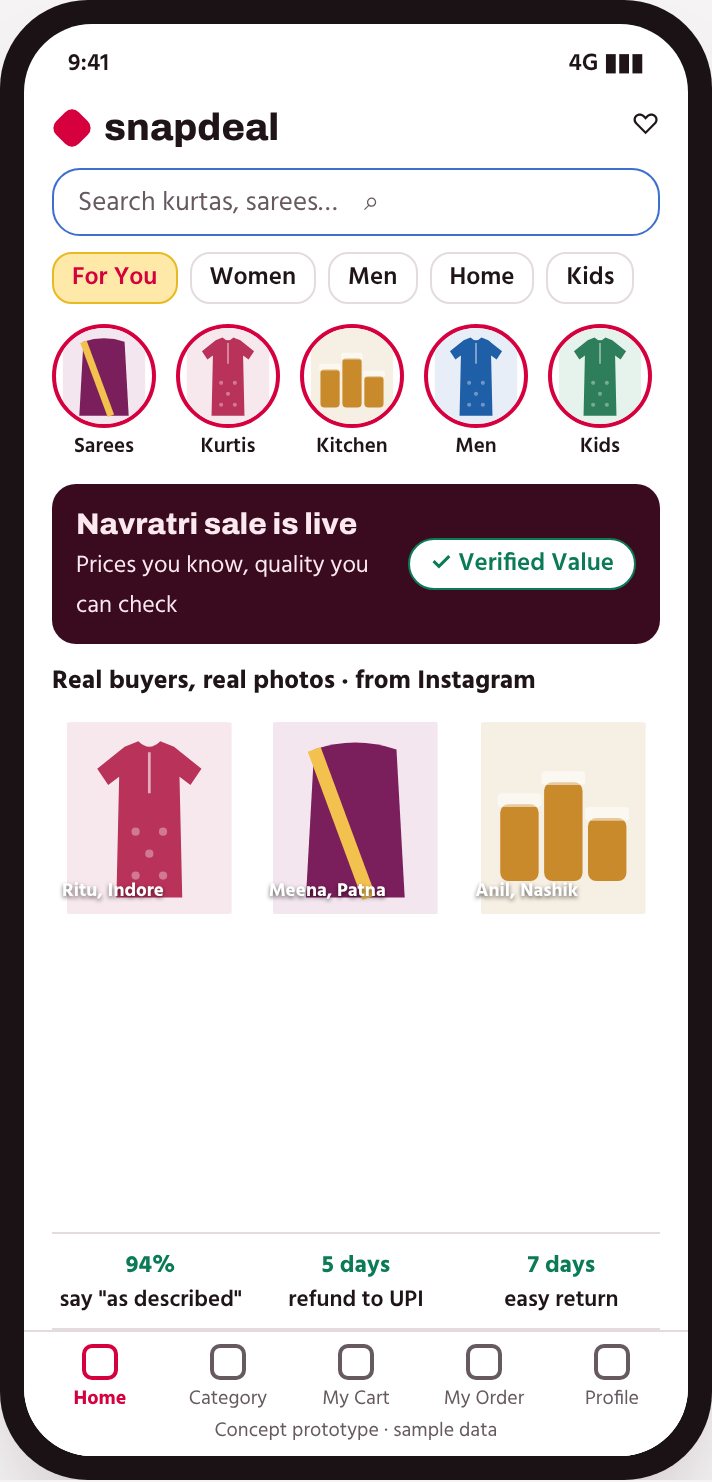
Tap inside the phone like a real app. Each screen shows "Today on Snapdeal" vs "In this concept". Hindi toggle; sample data only.


Turn on Verified Value
Open a checked kurta
Pick size with "fits like"
Opt in and place order
Report "Not quite", pick a fix
Fix a seller listing
| Task Target | Success measure |
|---|---|
| Find a verified kurta under ₹500 in your size | ≥ 85% complete without help |
| Decide if a storage set fits your kitchen | Correctly states dimensions |
| Say when it arrives and how you'd return it | States date, window, refund method |
| Return an item that did not match the photo | Done in ≤ 2 minutes |
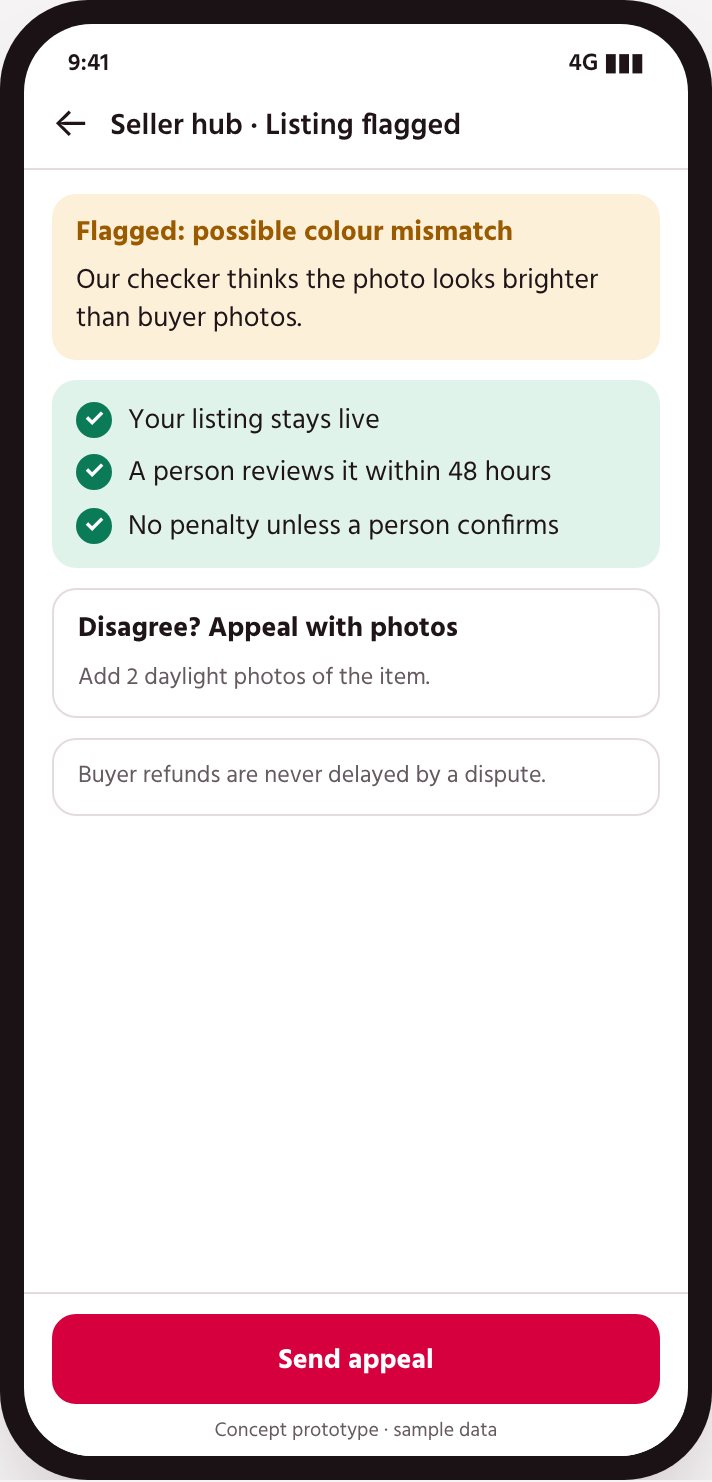
| (Seller) Fix a flagged listing, then appeal a wrong flag | Both done; understands why |
Hindi + 1 regional language · 44 px tap targets · text, not icon-only, badges · screen-reader labels.
The AI wrongly flags a correct listing as "colour mismatch". The listing stays live, a person decides within 48 hours, and the seller can appeal with photos.
Buyer refunds are never delayed by a dispute.
Order and returns data · listing-check model · 6–8 moderators · experimentation tool · carrier data (Q3)
If Q2 net is negative after 8 weeks, stop or redesign. Total ≈ ₹2.2 cr, released only gate by gate.
Costs are assumptions for team time, moderation, research and tooling.
| Use | How | Evaluation before launch | Human role |
|---|---|---|---|
| Listing checks | Compare title, specs and images; flag mismatches ("cotton" but image shows sheen) | Precision ≥ 90% on 1,000 labelled listings | Confirms flags before any penalty |
| Review summary | Pros and cons, each linked to source reviews | Faithfulness check on 200 summaries | Hidden under 20 reviews; feedback loop |
| Support replies | Suggest replies from policy + order status (RAG) | ≥ 90% correct on a 150-question test set | Agent sends; refunds by rules or people |
| Seller risk | Spot rising NAD returns by seller | Lead time vs manual review | Coaching first; penalty after review and appeal |
Listings, specs, images
AI + rules + review queue
Upload, moderation
Score, fixes, appeals
Reason codes, refunds
A/B, dashboards
Guardrails: no final refund or penalty decisions by AI · return reasons cleaned to codes first · buyer photos with consent, faces blurred · model calls only on new or changed listings (≤ ₹0.5 per check, assumption).
| Metric | Type | Why it matters | Pilot target Target |
|---|---|---|---|
| North Star: orders kept and rated "matched" | North Star | Only true listings and happy buyers raise it | Up month on month |
| "Not as described" return rate | Primary | Direct measure of listing accuracy | −2 pp vs control |
| 90-day repeat purchase | Primary | Trust should bring buyers back | +3 pp |
| Recovered buyers who reorder in 90 days | Primary | Recovery works | Set after Q1 baseline |
| Purchase conversion | Guardrail | Stricter listings must not cut choice too much | No drop > 1% |
| Successful delivery rate | Guardrail | The promise must hold | No decline |
| Complaints per 1,000 orders | Guardrail | Fewer returns must not mean blocked returns | Flat or down |
| Refund time | Guardrail | Trust in returns | ≤ 5 days |
| Pilot seller retention | Guardrail | Sellers may leave for zero-fee rivals | ≥ 90% |
| Contribution per order · cash burn | Guardrail | Must pay for itself | ≥ baseline · within budget |
Measured by A/B test in the pilot categories: half of pilot buyers see Verified Value. Targets are agreed with leadership after the Q1 baseline.
| Per 1,000 pilot orders, ₹ Assumption | Cons. | Base | Opt. |
|---|---|---|---|
| Fewer NAD returns (pp) | 1 | 2 | 3.5 |
| Saved trips (₹110 per avoided return) | 1,100 | 2,200 | 3,850 |
| Extra repeat orders × ₹15 contribution | 150 | 450 | 750 |
| Checks, moderation, support, coaching | −3,000 | −2,500 | −2,000 |
| Net per 1,000 orders | −1,750 | +150 | +2,600 |
| Per quarter at 3 lakh pilot orders | −₹5.25 L | +₹0.45 L | +₹7.8 L |
At ₹2.5 cost per order and +3 pp repeat (₹0.45 per order), NAD returns must fall by (2.5 − 0.45) ÷ 110 ≈ 1.9 pp. That is why the Q2 gate is −2 pp.
The ≈ ₹2.2 cr build cost is not paid back inside the pilot in any scenario; payback depends on expanding to more categories. Replace all unit costs with internal data in Q1.
| Risk | Mitigation |
|---|---|
| Strict rules push sellers to rivals | Coach first; verified listings rank higher; stop if retention < 90% |
| AI flags correct listings | Human check and 48-hour appeal; listing stays live |
| Returns fall but trust doesn't | Track complaints and NPS by reason, not returns alone |
| Costs rise faster than savings | Stop at the Q2 gate if net < 0 |
| Buyers see little difference | Q1 concept tests before build; A/B measures real behaviour |
Approve ₹35 lakh for a 90-day Q1: research, baseline and prototype tests, with a go / no-go on day 90.
Full plan ≈ ₹2.2 cr over four quarters, released gate by gate.
Share of returns that are NAD · real cost per return · whether buyers pick apps for reliability · seller willingness to meet standards.
Pilot seller retention falls below 90%
Q2 net is below ₹0 per 1,000 orders after 8 weeks
Complaints rise while returns fall
FY24–26 group and segment figures, NMV, customers, Tier 2+ and price-band shares, history, competitor positioning.
Why losses narrowed; price no longer differentiates; trust is the open gap.
Customer problem, segments, RICE inputs, costs, targets and the economics.
Key sources
S1 Chittorgarh, AceVector (Snapdeal) IPO, Sep–Oct 2026 · S2 equityresearchindia.com and oquilia.com RHP summaries, Sep 2026 · S3 MediaNama, AceVector UDRHP, 9 Dec 2025 · S4 CNBC, 17 Nov 2015 (Morgan Stanley share data) · S5 Business Today, 31 Jul 2017 · S6 Global Venturing, 29 Oct 2014 · S7 Wikipedia "Snapdeal", accessed 12 Oct 2026 · S8 Financial Express, 2024 · S9 Torus Digital, Meesho listing, 10 Dec 2025 · S10 Walmart corporate, Shopsy, 8 Jun 2023 · S11 Business Today, Shopsy, 28 Feb 2023 · S12 TechCrunch, Amazon Bazaar, 20 Feb 2024 · S13 Inc42, Unicommerce IPO, Aug 2024 · S14 Bain, How India Shops Online 2026, 8 Apr 2026 · S15 Inc42, "Snapdeal makes it to D-Street", 5 Oct 2026 · S16 INDmoney, Meesho IPO (RHP data) · S17 Qoruz, @snapdeal Instagram, Oct 2026 · S18 Flipkart Stories, Shopsy, 25 May 2026 · S19 YourStory, Amazon zero referral fees, 2 Mar 2026 · S20 Kearney via Business Today, 17 Aug 2021 · S21 Live iOS app screenshots, 15 Oct 2026
Prove the problem, pilot the fix, scale only on evidence.
Establish the baseline: returns by reason, repeat, complaints
Talk to 24 buyers and 10 sellers; run the journey audit
Test the prototype; decide go / no-go on day 90